

Sightseeing Highlights










Cortona,
atop its lofty perch at 650m (~2,100 ft.) where you're "closer
to God", has been blessed over many centuries with a
wealth of famous citizens, structures, and artifacts. Below are
listed only a few of the prominent structures, artwork, and figures.
Notable
structures range from the Etruscan tombs (or Melone
- open only a few days a year) to the great churches and
palaces. Chief among these are Palazzo
Comunale (town hall, 13th c.)
in piazza della Repubblica, Palazzo
Casali (in piazza Signorelli; houses the Museo dell'Accademia
Etrusca), and Palazzo Tommasi (across from
the Duomo).
Churches include the Duomo,
which dates to the 1200s; Chiesa del Gesù
(houses the Museo Diocesano - across the piazza from the Duomo); S.
Margherita (at the top of the town - wherein lies the body of
one of Cortona's patron saints, Santa
Margherita, (who died in 1297); and two small gems, San
Cristoforo and San Nicolò
dating from 12th/15th centuries, respectively. Note: most churches
are closed daily 12:00-15:00 during siesta.
Artifacts range from an
amazing Etruscan chandelier (ca 500 BC) in the Etruscan
Museum to the magnificent Annuciation
by Beato
Angelico (1400-1455)
in the Museo
Diocesano. There are many paintings and buildings (e.g.
Palazzo Tommasi, formerly Palazzo Zefferini) with major works done in
the early 1600s by Giovanni, Francesco, and Pietro Berrettini
(1596-1669), aka Pietro da Cortona; works by local artists Luca
Signorelli (1450-1523) in the Museo Diocesano and S.
Nicolò (works also in the Sistine Chapel in Rome); and by GinoSeverini, who created the stations of the cross mosaics lining via S. Margherita. Note: Mar 5 - July 3, 2011 - Special Exhibition of 40 Etruscan artifacts from the Louvre on exhibit at Palazzo Casali in the Etruscan Museum
Also to be counted are
the poet Francesco Benedetti (1785-1821) who wrote Gismonda and
Tamerlano; in recent times we include the Cortona-born rap artist and
author Lorenzo Cherubini aka Jovanotti (Villetta
Fiorita).
Lago Trasimeno is a short drive
from Cortona and the towns surrounding the lake (e.g. Castiglione del Lago, Passignano, San Feliciano, and Tuoro provide pleasant places
to walk, dine, and enjoy the water. There are also ferries (traghetti) you can
take to visit several of the islands.
Many visitors also want
to see Bramasole, the house in Under
the Tuscan Sun.
To get to the house, walk all the way through the Giardino Pubblico,
go past the Tennis Club, and continue on viale Passerini uphill for ~
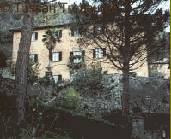
1km. Bramasole is on your left (picture at left). You can also
drive past Bramasole: take the road on the west side of Cortona to
Torreone; turn right at Torreone towards the Church of S. Margherita
and, where that road splits into three at a small Bar, take the road
to the left downhill; Bramasole will be on your right in ~0.5km. Note:
Bramasole is a private residence and there are no tours.
The Mayes' purchased (and remodelled extensively - including landscaping
and a pool of "notable dimensions" - since at least Spring
2001) a rustic farmhouse NW of Cortona on the downhill slope of Mt. San
Egidio (in loc. S. Egidio); take a left turn across the road from Castelgirardi
(dir. Cantalena) and go past Villa Gugliemesca to where the road forks into a tarmac
one which heads up to the top of Mt. San Egidio and a steep (and rough) strada bianca which descends
and bisects the "strada basolata." The left-hand fork leads to the new house; however,
there is a good view of the house and grounds from a turnout on the tarmac road.
The new house "Fonte delle Foglie" (picture below) was featured,
with pictures and a story of how they found the house and survived another restoration,
in Francis' latest book "Bringing Tuscany Home".
"Fonte delle Foglie" has been sold.
Post sale, a bevy of contractors have been doing restauration and remodel
work on the house and grounds of Bramasole.
An email received from the Mayes' in November 2003 states that they do not plan to move from
Bramasole and that they did not purchase the second house because of
tourist traffic past Bramasole. In fact, according to correspondence
from Frances Mayes to a writer of the NJ Star Ledger (article
published September 18, 2003), the Mayes' find the vast majority of
tourists who come by Bramasole to be interesting and friendly; the
Mayes' sometimes invite them into the gated property to view the
garden. [Note: Notwithstanding that, it appears that the Mayes' spend most of their time
at Fonte delle Foglie when they are in Cortona; Bramasole rarely appears to have anyone there
with the exception of the caretaker/landscaper.]
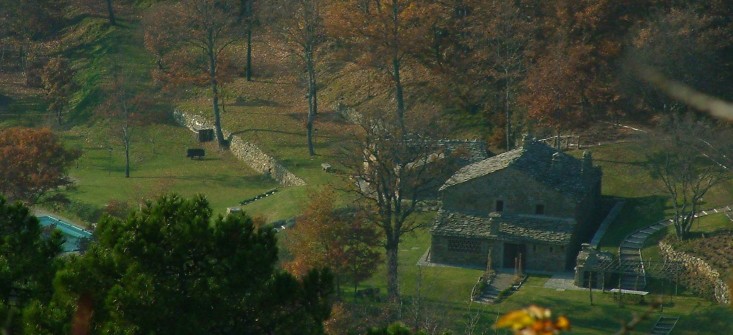
Fonte delle Foglie
Fonte delle Foglie - Toscana Servizi Immobiliari
In a related move, a local immobiliare reports that Barrett Wissman has sold his house "Villa Bacchino" which is on a strada bianca to the N. not far outside Cortona for about 3 million euros. Wissman is owner & chairman of the arts management company IMG Artists which produces the Tuscan Sun Festival that relocated in 2012 from Cortona to Florence.
Via Rinfrena was reputed to be the "street of the prostitutes" in times when Cortona was under Roman rule - it is conveniently located just to the right after you enter Porta Colonia.

Etruscan
and Diocesan Museums - priceless exhibits portraying Cortona history
Museum Hours
Etruscan Mus.
April-Oct.
Mon-Sun
10:00-19:00
Nov-March
Tue-Sun
10:00-17:00
Guided Tours available
Diocesan Mus.
Tues-Sun
April-Sept.
9:30-13:00; 15:30-19:00
Oct.
10:00-13:00; 15:30-16:00
Nov.-March
10:00-13:00; 15:00-17:00

Etruscan lamp
(Museo Etrusco)

Fra Angelico's
Annuciazione
(Museo Diocesano)
